
Translate
 Select
-
 English
-
Kiswahili
-
Afrikaans
-
هَوُسَ
-
Asụsụ Igbo
-
اَف صَومالي˜
-
Yorùbá
-
isiZulu
-
Français
-
Dansk
-
Svenska
-
Norsk
-
Íslenska
-
Suo̯men
-
Català
-
Cymraeg
-
Gaeilge
-
Deutsch
-
Galego
-
Nederlands
-
Euskara
-
Italiano
-
Español
-
Português
-
босански
-
Українська
-
Slovenski
-
Slovenčina
-
Srpski
-
Русский
-
Română
-
Polski
-
Lietuvių
-
Latviešu
-
Magyar
-
Eesti
-
Český
-
Hrvatski
-
Беларускія
-
Български
-
Shqip
-
Ελληνικά
-
Македонски
-
ქართული
-
বাংলা
-
ગુજરાતી
-
ພາສາລາວ
-
தமிழ்
-
Sinugbuanon
-
Монгол хэл
-
ភាសាខ្មែរ
-
Basa Jawa
-
मराठी
-
آذری
-
Հայերեն
-
اردو
-
Türkçe
-
Tiếng Việt
-
ภาษาไทย
-
فارسی
-
Bahasa Malaysia
-
조선말
-
日本語
-
Bahasa Indonesia
-
मानक हिन्दी
-
עברית
-
Filipino
-
漢字
-
汉字
-
العربية
-
Kannaḍa
-
తెలుగు
-
Hmong
-
नेपाली भाषा
Our chairman, Ernie Hunter welcomed all members including several new members to our meeting. He reminded everyone of the fungi walk to be led by Jackie Arrell on Saturday at Derrynoid. Mike McGrath introduced our speaker for the evening, Simon Gray, Head of Peatland Recovery with Ulster Wildlife. This group now have three offices in Northern Ireland, Belfast, Enniskillen and An Creggan.
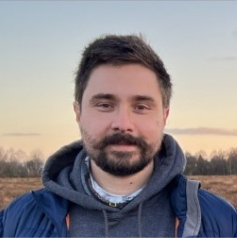
Simon Gray Ulster Wildlife who spoke to us on Peatland Wildlife
Simon explained that peat is basically waterlogged soil and is an accumulation of vegetation which is prevented from fully decomposing. 18% of Northern Ireland is covered in peatlands. Peatlands are made up of blanket bogs and heathlands which are found on uplands such as in the Belfast Hills and the Sperrin Mountains, raised bogs which can be found in the Bann Valley and Lough Neagh and fens which are like reed beds, their water coming from groundwater and not from precipitation like the others mentioned. Fens can for be found in Lecale in Co. Down.
Peatlands are not easy environments for wildlife to inhabit because they are so exposed, they are very wet, and the soil is acid. The animals and plants must therefore be specially adapted, and Simon then spoke on the variety of fauna and flora which can be found.
Read more: Peatland Wildlife by Simon Gray Ulster Wildlife Tuesday 8th Oct 2024
The first meeting of the new season opened with chairperson Ernie Hunter welcoming all attendees. He briefly mentioned our successful summer fieldtrips and congratulated committee member Claire Hassin on the birth of her baby girl and Edmund Slaine who has recently become a married man! Money from a grant from Mid Ulster Council which had been applied for went towards purchasing five bat detectors. The rest of the grant will be put towards buying a trail camera and a bird nest recorder. He also thanked Sophie and Sebastian Graham for donating a moth trap to the club.
He then introduced our speaker Dr Eimear Rooney. Eimear did her PhD on Raptors Ecology. The word raptor comes from Latin meaning to ‘take by force ‘There are two groups; the Falconiformes which includes hawks, falcons, eagles and vultures and the Strigiformes which are represented by the owls. The NI Raptor Study Group started in 1991 and in 2013 with the help of funding Eimear became Raptor Officer. She explained what was involved with this position such as coordinating volunteers, recording raptors and even climbing ladders to look at nests! Forming a database is a very important part of her job and information is gathered not only from volunteers but from members of the public. This information can be anything from reporting nest occupancy to breeding outcome of the nests found.
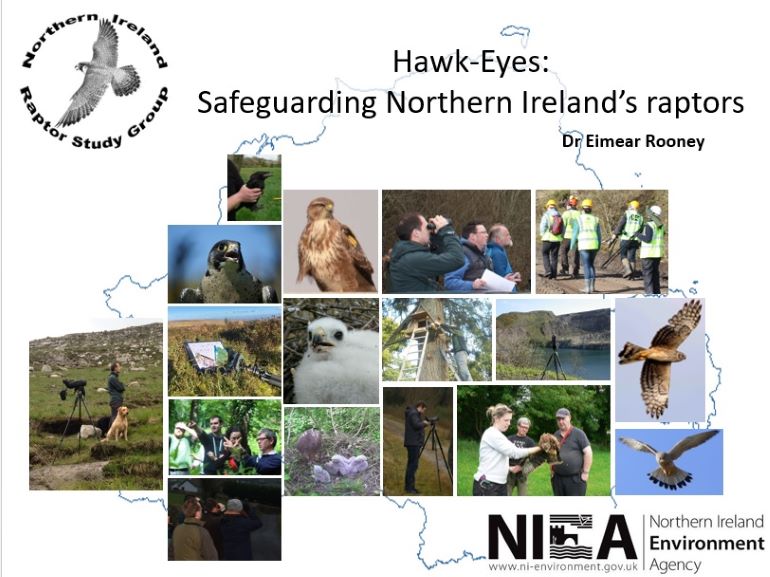
Eimear informed us that raptors are 50% in decline globally. In the 1900s many birds of prey became extinct in Ireland. Buzzard, goshawk, hobby and golden eagle were no longer to be found. Now we have 14 species in Northern Ireland. The list includes common buzzard, red kite, goshawk, hen harrier, marsh harrier, white tailed eagle, golden eagle, merlin, kestrel, hobby, peregrine falcon, osprey, barn owl and long eared owl. The honey buzzard and short eared owl have also been noted. Different birds of prey have different pressures to contend with. Some may suffer from habitat loss, others from disturbance, poisoning and even climate change. Eimear proceeded to tell us in more detail about some of the birds of prey she had mentioned.
Read more: Northern Ireland's Birds of Prey Tues 10th Sept 2024
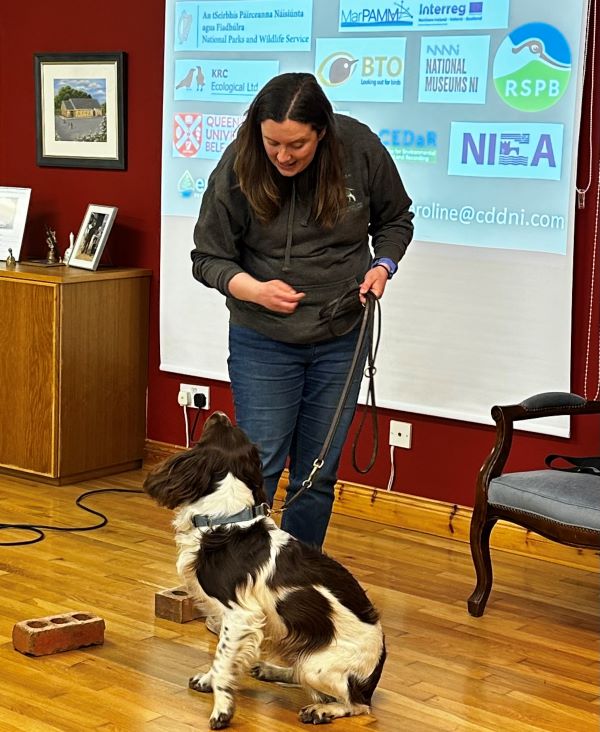
Caroline with one of her detection dogs
Dr Caroline Finlay the founder of Conservation Detection Dogs N.I was our last speaker of the season. Caroline has been working in conservation for over ten years studying many animals including Red Squirrels in Northern Ireland.
Dogs she said have an amazing sense of smell having 300 million scent receptors in their noses compared to humans with only 400. In other industries they have been used for detecting explosives, drugs and diseases such as Cancers and Parkinson’s disease but in conservation the use of dogs has been limited. Caroline believes passionately this should not be the case.
Read more: Conservation Detection Dogs by Caroline Finlay 9th Apr 2024
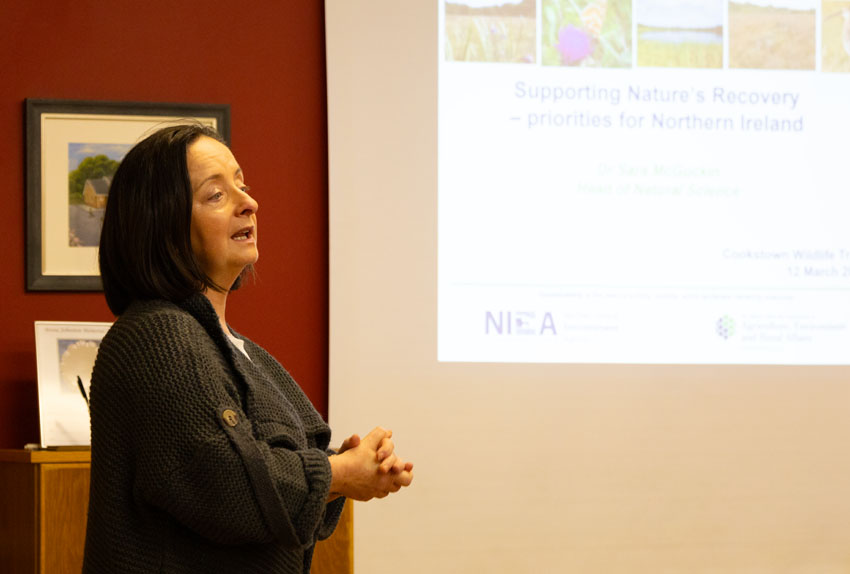
Our speaker for 12th March 2024 was Dr Sara McGuckin, Head of Natural Science at Northern Ireland Environment Agency. The agency’s main purpose is to protect and enhance Northern Ireland’s environment. Sara spoke on biodiversity which concerns the variety of all living things and their interactions, and how important they are for the processes that support life on Earth. Without a wide range of animals, plants and microorganisms we cannot have healthy ecosystems. Northern Ireland has special biodiversity as it is part of the Atlantic biogeographic region with specialist habitats and species associated with mild winters and cool summers.
The Agency has established five key priorities:-
1.Working towards a compliant regulated industry.
2. Delivering freshwater environment at ‘good status.’
3.Tackling waste crime.
4. Supporting good habitat, earth science and landscape quality and enhancing species abundance and diversity.
5. Promotion of environmentally sustainable development, infrastructure and access to good green and blue spaces.
However, Sara pointed out that despite having a whole suite of international agreements protecting nature in Northern Ireland, nature is in serious decline.
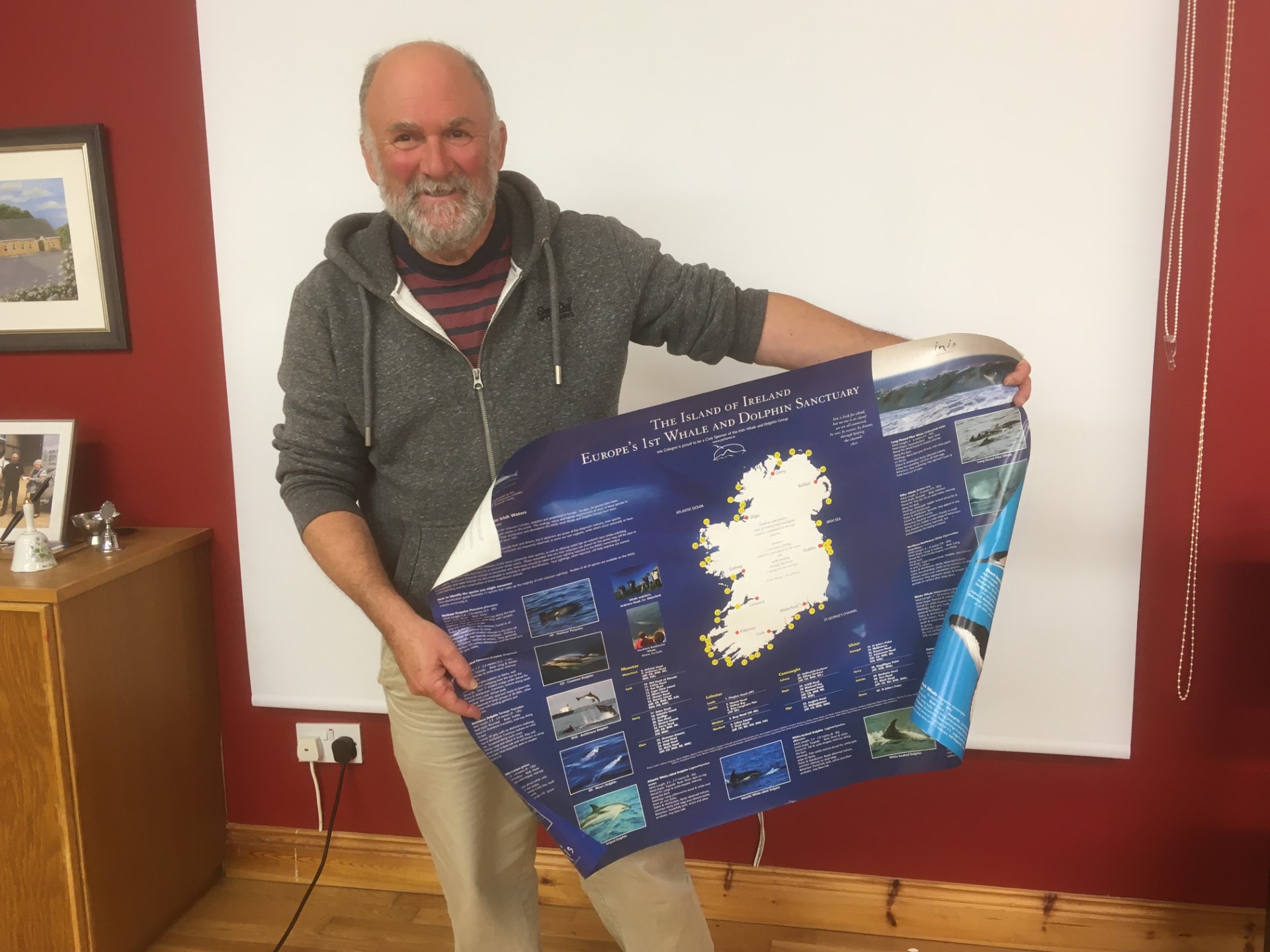
0n 13th February 2024 Ian Enlander, from the Irish Whales and Dolphin Group, gave a very enlightening talk on these animals. This group was formed in 1990 to conserve and develop an understanding of whales, dolphins and porpoises in Irish waters. They campaigned for Irish territorial waters to become a sanctuary for them and in 1991 Irish waters were designated as Europe’s first whale and dolphin sanctuary. Charles Haughey, the Taoiseach was a keen follower of this group and after his death in 1992 his family donated his boat to the group.
To date 26 species have been recorded in Ireland and as there are 94 species globally Ian explained that the number recorded in Ireland represents a sizable proportion of the global figures.
Read more: Irish Whales and Dolphins talk by Ian Enlander Tues 13th Feb 2024