
Translate
 Select
-
 English
-
Kiswahili
-
Afrikaans
-
هَوُسَ
-
Asụsụ Igbo
-
اَف صَومالي˜
-
Yorùbá
-
isiZulu
-
Français
-
Dansk
-
Svenska
-
Norsk
-
Íslenska
-
Suo̯men
-
Català
-
Cymraeg
-
Gaeilge
-
Deutsch
-
Galego
-
Nederlands
-
Euskara
-
Italiano
-
Español
-
Português
-
босански
-
Українська
-
Slovenski
-
Slovenčina
-
Srpski
-
Русский
-
Română
-
Polski
-
Lietuvių
-
Latviešu
-
Magyar
-
Eesti
-
Český
-
Hrvatski
-
Беларускія
-
Български
-
Shqip
-
Ελληνικά
-
Македонски
-
ქართული
-
বাংলা
-
ગુજરાતી
-
ພາສາລາວ
-
தமிழ்
-
Sinugbuanon
-
Монгол хэл
-
ភាសាខ្មែរ
-
Basa Jawa
-
मराठी
-
آذری
-
Հայերեն
-
اردو
-
Türkçe
-
Tiếng Việt
-
ภาษาไทย
-
فارسی
-
Bahasa Malaysia
-
조선말
-
日本語
-
Bahasa Indonesia
-
मानक हिन्दी
-
עברית
-
Filipino
-
漢字
-
汉字
-
العربية
-
Kannaḍa
-
తెలుగు
-
Hmong
-
नेपाली भाषा
Ernie Hunter our chairperson welcomed a large crowd to our February meeting. He mentioned our CWT members mobile phone photographic competition, all entries to be in by Friday 30th October. He then introduced our speaker Ross McIlrath who since 2021 has been Priority Species Officer for Ulster Wildlife. He is involved in conservation efforts with species such as pine marten, red squirrel and barn owl which was his topic for the evening.
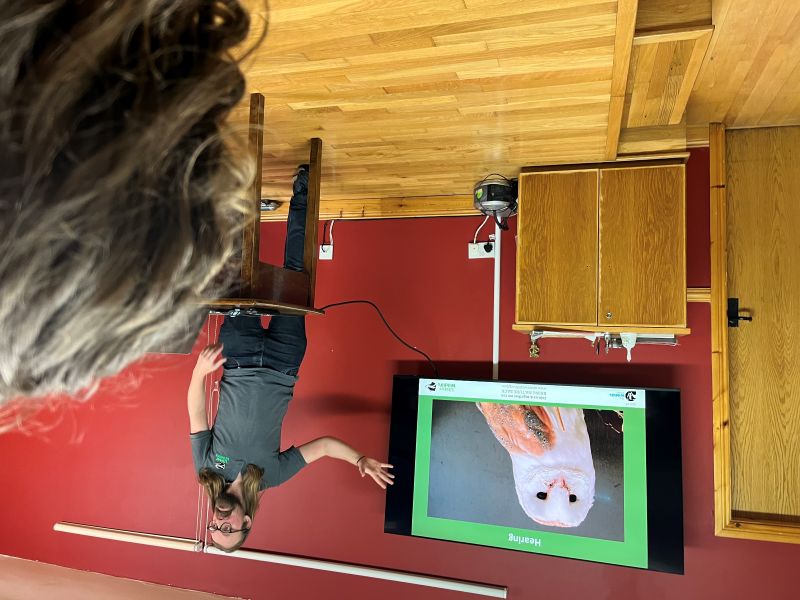
Ross McIlwrath from Ulster Wildlife spoke on Barn Owls
Ross introduced us to the barn owl which can sometimes be known as the ‘graveyard screecher’. This is because of its ghost like pale appearance and its chilling high-pitched screech, a sound which is associated with the legend of the Irish banshee.
The barn owl in Ireland is whiter underneath than its counterparts in the rest of the UK. It is the size of a woodpigeon, but it looks bigger due to its wingspan which can reach up to a metre in length. It has white underparts with beige back and wings mottled with grey. It has large dark eyes which are fixed and they use their head much more than normal. Their hearing is good with ears situated in the front of their heart shaped face. These are at different heights which means they can pinpoint sound more effectively. Their whole face is one listening device.They have good night vision which helps them locate prey and this with their exceptional hearing makes them very efficient predators.
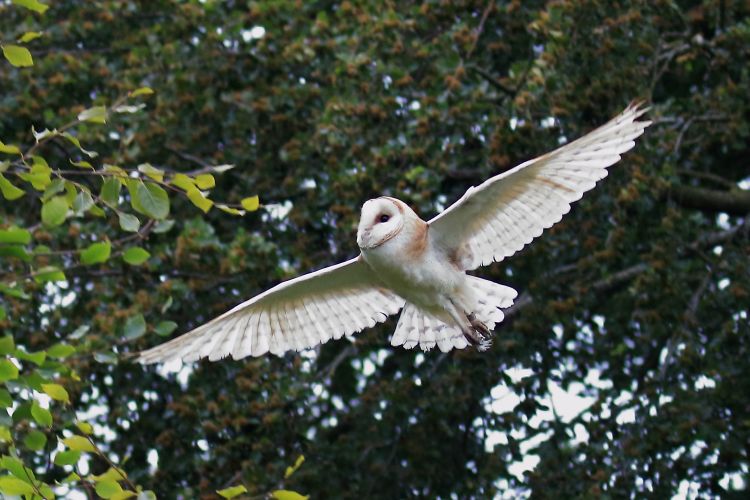
Barn Owl ---photo by Ronald Surgenor
Alan Aitken then introduced our speaker Dakota Reid who is Conservation Officer for the RSPB. She also volunteers with Wild Belfast which is a group dedicated to conserving and enhancing Belfast’s natural habitat.
Dakota has a passion for all invertebrates. They are not just a food source for birds but also for reptiles and mammals such as bats and foxes. They are also crucial in pollinating plants, acting as decomposers, recycling nutrients and controlling pests.
Northern Ireland is home to a diverse number of insects, and some are rare. For example, the cryptic wood white butterfly is found only in Ireland and not In Great Britain. It prefers open grassland as opposed to woodland glades where the similar wood white butterfly can be seen. The cryptic wood white has an unusual courtship with the males performing elaborate dances to signal their species. Other rare species found in Ireland are the marsh fritillary butterfly and the Irish damselfly.
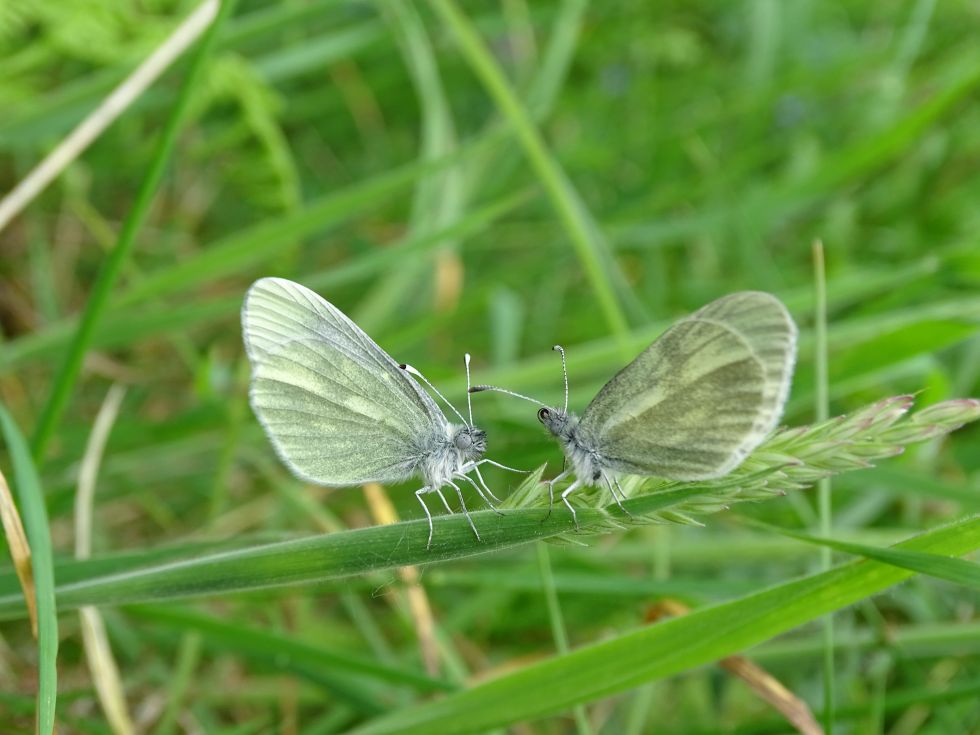
Cryptic wood white butterflies courting--Photo by Dakota Reid
Read more: Invertebrates of Northern Ireland lecture by Dakota Reid on 13th Jan 2026
We had a terrific Members Night with four presentations from members and later musical entertainment. Unfortunately Storm Bram and flu kept some members away.
Slawomir Starzynski presented "Adventures in Bird Photography"
Slawomir explained he gets better pictures if he goes out alone rather than with a group of birders. He also commented that in the 20 years he has been in Northern Ireland he has noticed a significant overall drop in wild bird numbers. He first showed us pictures of relatively common Northern Ireland birds. But Slawomir's photographic skills awakened our appreciation of the vivid colours on turnstone, oystercatcher, purple sandpiper, ringed plover, black guillemot, treecreeper and the two "Sentinels of the Marsh" namely redshank and common sandpiper which are difficult to photograph as so they are so easily frightened off.
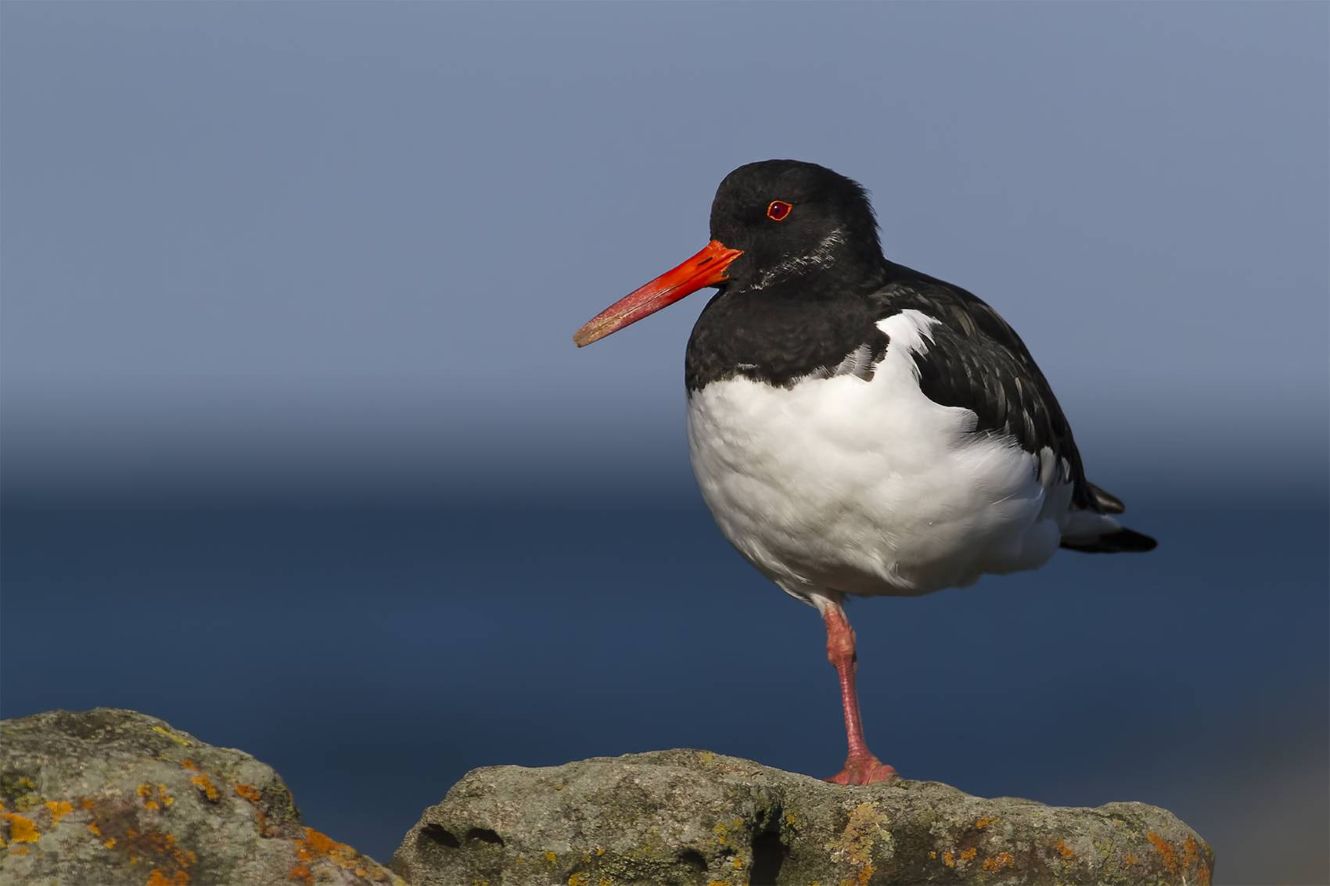
Oystercatcher by Slawomir Starzynski
The humble oystercatcher above was once so common here and in Scotland that Scottish fishermen asked for them to be culled due to their perceived impact on mussel beds but in recent years there has been an unexplained drop in the number of oystercatchers by more than 50%.
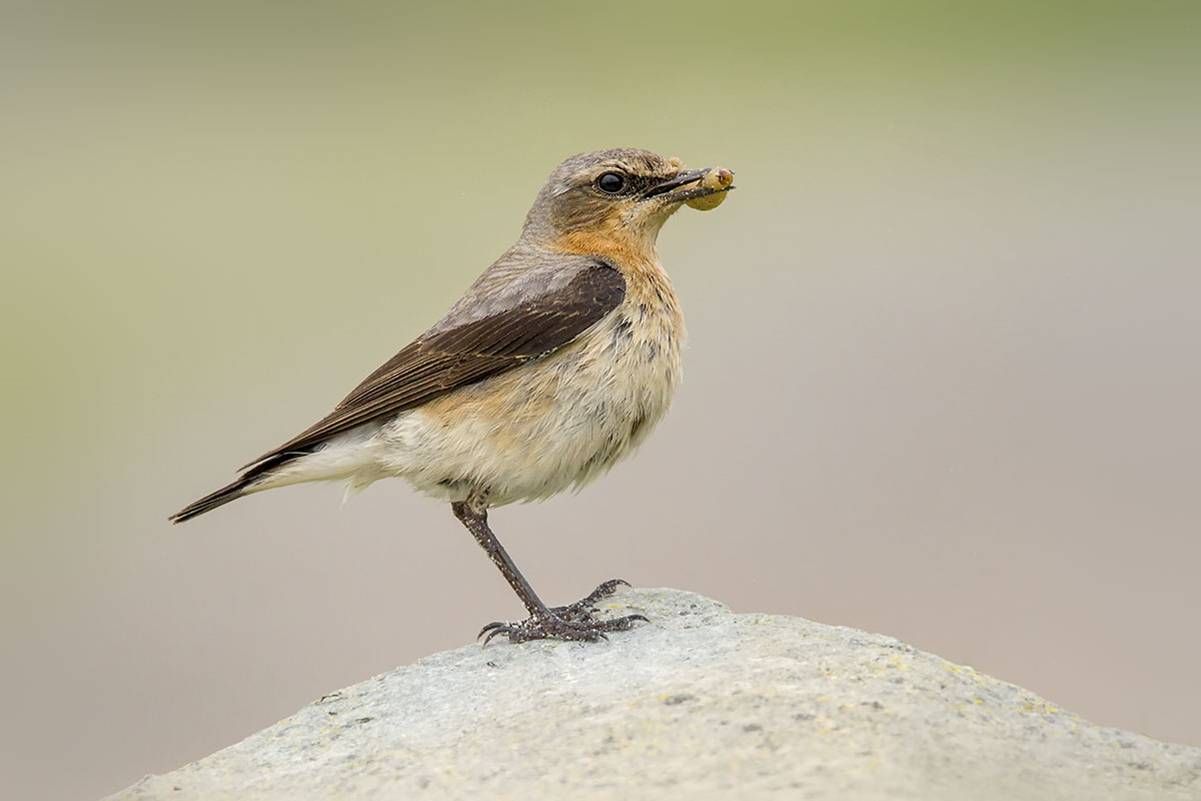
Wheatear--summer visitor likes posing for photographs.--photo by Slawomir Starzynski
The Chairperson paid tribute to our long-standing member Winston Gourley who had passed away recently. Winston brought much knowledge and joy to our meetings and will be sadly missed.
The Chairperson informed us that Ulster Wildlife have appointed Ann Ward as Nature Project Officer for the Mid Ulster. Ulster Wildlife are joining with Mid Ulster Council to deliver a new initiative called “Uniting for Nature” with the launch meeting at Pomeroy Forest Centre on 4th December.
The Chairperson then introduced our speaker for the night. James Napier has an Honours Degree in Biology, an MSc in Contemporary Biology and did his PhD on the Evolutionary Ecology of Wild Garlic. James taught at Dungannon Royal School and later Wallace High School where he became Vice-Principal. He was Chief Examiner for A Level Biology until 2023. He is author and co-author of over 20 Science and Biology textbooks. He writes a monthly article for the Down Recorder Newspaper. He is also author of the excellent little book “An Introduction to the Wildflowers of Northern Ireland” Photography is his hobby with a focus on landscapes and nature. James’s subject for our talk was “Photographing Nature with a Smart Phone”
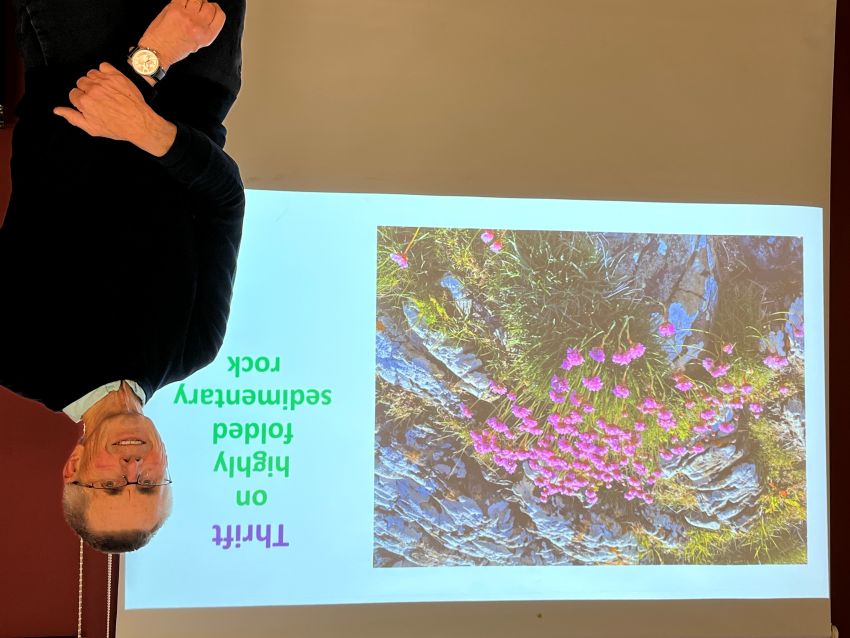
James Napier BSc. MSc. PhD
James explained he uses quite an old phone—Apple i Phone 13 Pro Max. Of course, a smart phone is only of use to photograph stationary plants or slow-moving animals such as limpets or sea anemones and is not of use to take picture of fast animals, difficult to access organisms or microscopic structures.
Photographing plants at low magnification allows a wider field of view and a greater depth of focus. This allows one to include interesting background features. For example James showed pictures of bird’s-foot-trefoil with Gunn’s Island in the background and hare’s-tail cottongrass with Belfast Lough in the background.
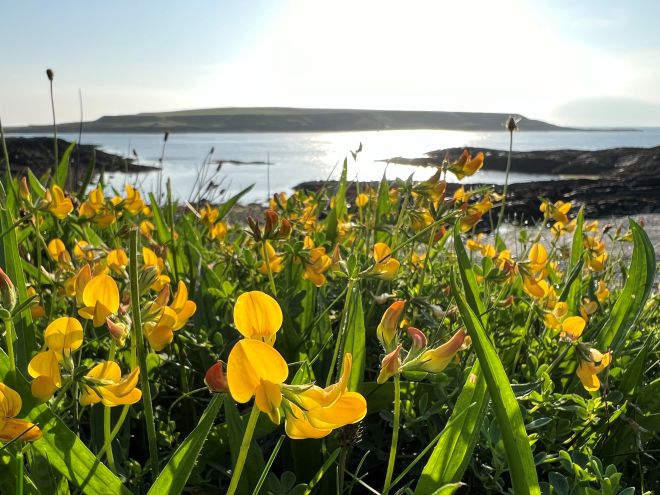
Bird-foot trefoil (Lecale Coast with Gunn's Island in background) by James Napier
Read more: Photographing Nature with a Smart Phone by James Napier
There was a large attendance including new members for our October meeting. Before introducing the speaker for the evening our chairperson Ernie Hunter enquired if anyone would like to do a short presentation for Members Night in December and to contact him if so. The speaker, Stephen McGuiness, an RSPB project worker at Glenwherry thanked Ernie for the invitation to speak on Europe’s largest wader, the curlew.
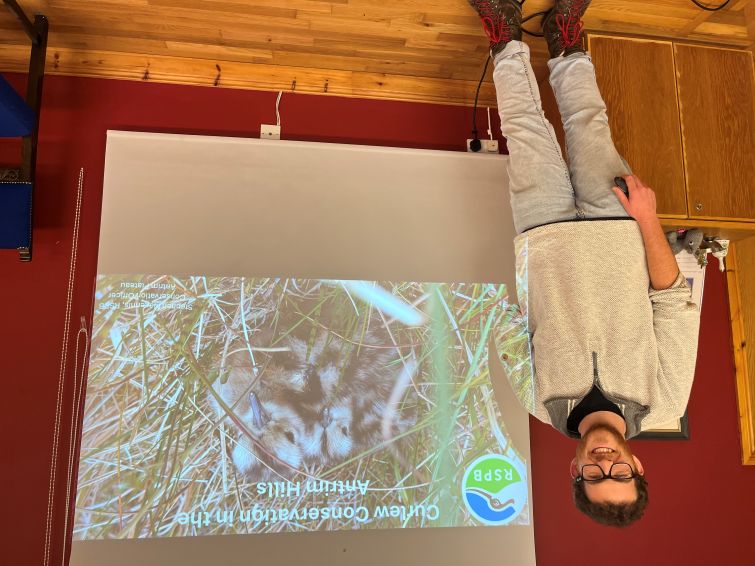
Stephen Magennis RSPB Conservation Officer Antrim Hills
The curlew is distinctive for having a long downward curved bill. They are long lived and only breed when 3 years old. So, it can be several years before it is realised that low chick productivity is seriously impacting the survival of the species. Once common they are now on the Red List with an estimate of 250 breeding pairs in Northern Ireland. Glenwheery situated between Ballymena and Larne is an upland plateau consisting of grassland, heath and blanket bog. It is a special protection area for hen harriers and merlins but not for waders even though it is one of the best sites in Northern Ireland for breeding curlews.
Read more: Curlew Conservation in the Antrim Hills by Stephen Magennis RSPB 14th Oct 2025