
Translate
 Select
-
 English
-
Kiswahili
-
Afrikaans
-
هَوُسَ
-
Asụsụ Igbo
-
اَف صَومالي˜
-
Yorùbá
-
isiZulu
-
Français
-
Dansk
-
Svenska
-
Norsk
-
Íslenska
-
Suo̯men
-
Català
-
Cymraeg
-
Gaeilge
-
Deutsch
-
Galego
-
Nederlands
-
Euskara
-
Italiano
-
Español
-
Português
-
босански
-
Українська
-
Slovenski
-
Slovenčina
-
Srpski
-
Русский
-
Română
-
Polski
-
Lietuvių
-
Latviešu
-
Magyar
-
Eesti
-
Český
-
Hrvatski
-
Беларускія
-
Български
-
Shqip
-
Ελληνικά
-
Македонски
-
ქართული
-
বাংলা
-
ગુજરાતી
-
ພາສາລາວ
-
தமிழ்
-
Sinugbuanon
-
Монгол хэл
-
ភាសាខ្មែរ
-
Basa Jawa
-
मराठी
-
آذری
-
Հայերեն
-
اردو
-
Türkçe
-
Tiếng Việt
-
ภาษาไทย
-
فارسی
-
Bahasa Malaysia
-
조선말
-
日本語
-
Bahasa Indonesia
-
मानक हिन्दी
-
עברית
-
Filipino
-
漢字
-
汉字
-
العربية
-
Kannaḍa
-
తెలుగు
-
Hmong
-
नेपाली भाषा
There are two species of seals around Northern Irish coasts, the grey seal and the common or harbour seal. The grey seal is the most common. Both are true seals in that they have no external ears. Leading a mostly aquatic life they go to land only to moult, rest and have young. Both are sociable and form harems or colonies.
These two species are quite easy to distinguish from each other. The grey seal has a larger head with a sloping nose while the common seal has a smaller round labrador type face with v shaped nostrils. The grey is mostly as the name suggests of a grey colouration with dark blotches and spots with pale bellies.
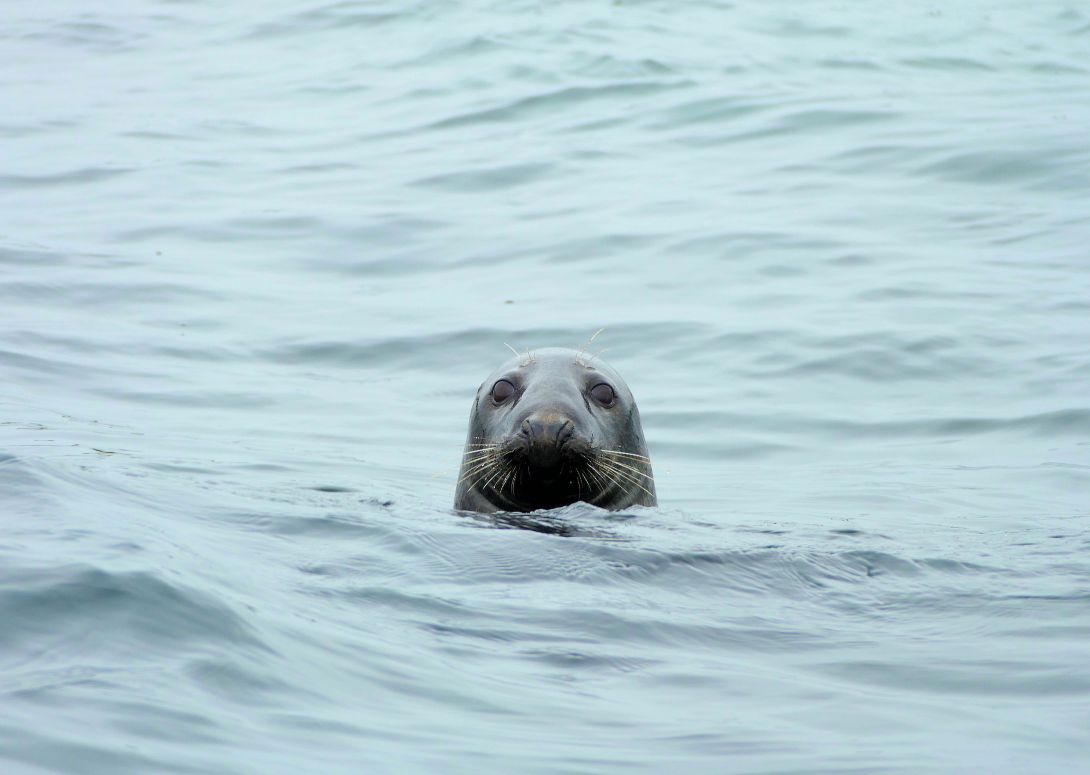
Grey seal
The common seal varies in colour from white to dark brown, generally though they are grey with dark spots. Unlike the common seal ,grey seals have large colonies. One of the most important colonies is off the Blasket Islands in Co Kerry and in Northern Ireland they can be spotted off Rathlin Island and around Murlough Bay.
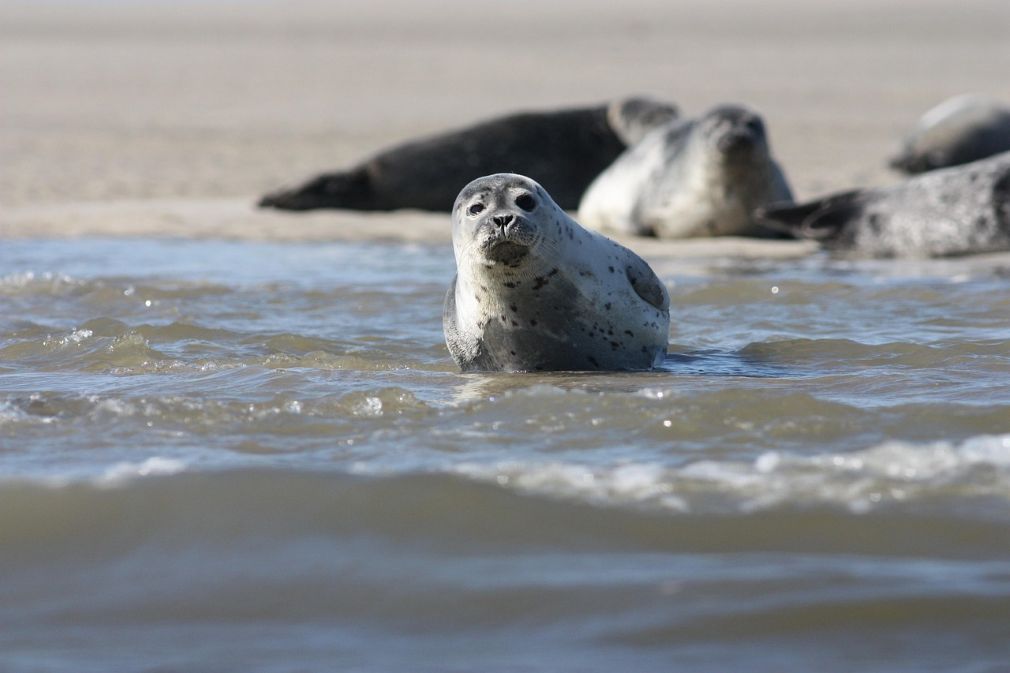
Common seal
When I was a child, I visited a neighbour’s house so often that if she was busy, she would send me into the nearby corn field to look for harvest mice. I never saw any as they are not found in Northern Ireland, but it kept me busy for half an hour and no doubt gave her some peace. She was confusing the harvest mouse with a wood mouse or as it can be called the long-tailed field mouse. This mouse is larger than the harvest mouse with a brownish back, a white, grey belly and a non-prehensile tail. The poor wood mouse can also be mistaken for a house mouse. The two are different species and do not interbreed. The main differences are wood mice have larger eyes and ears, brown fur and live mostly outdoors in woods or gardens. During autumn and winter they will come into buildings for shelter and food. House mice are not so cute They are larger with small features, grey, brown in colour and are usually found in buildings. They also have a stronger muskier smell!
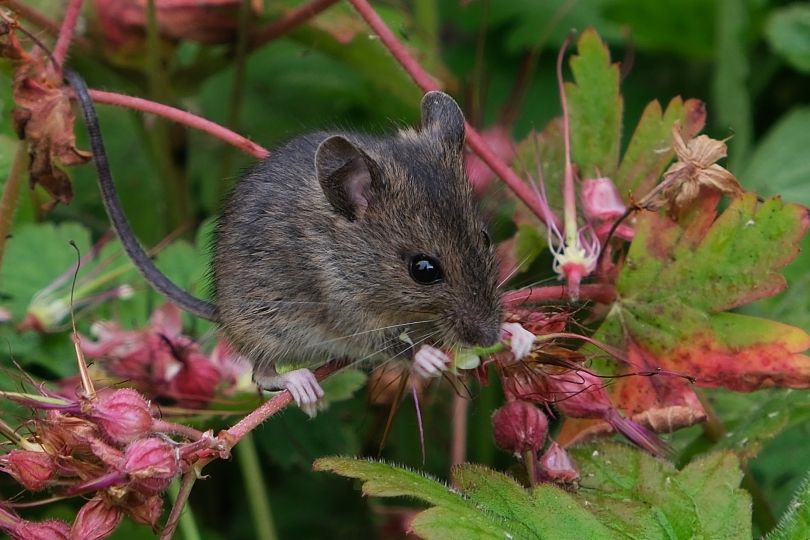
Wood mouse at Global Medicine Garden Belfast Botanic Gardens--photo by Kevin McKernan
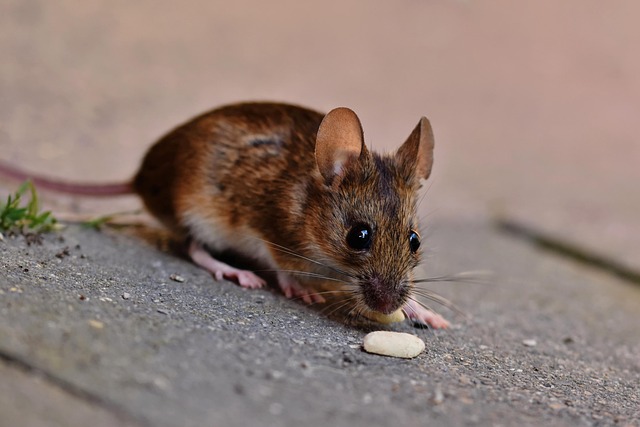
House mouse --it is bigger than a wood mouse
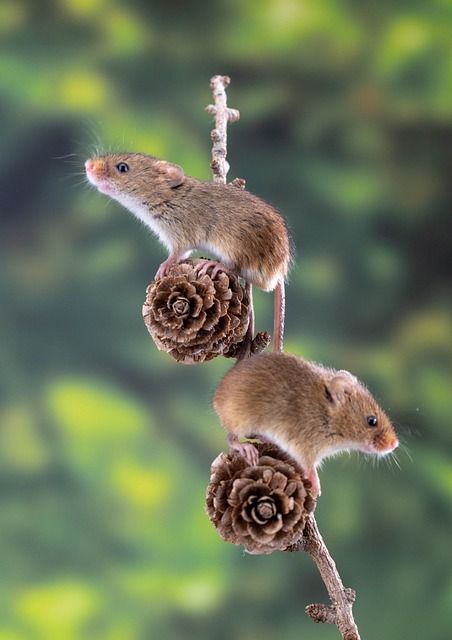
Harvest mice--they are even smaller than wood mice
Hedgerows are a rich habitat and are a haven for all types of wildlife especially in the sparse cold winter months. In an old hedge there are three layers. At the heart of it is a shrub layer often a mixture of hawthorn, blackthorn holly and elder. At intervals along this grow trees such as oak and ash which creates shelter as well as providing host to all types of animals. At ground levels are plants like nettles and cuckoo pint and all these layers are intertwined with plants such as sweet-smelling honeysuckle, brambles, and dog roses.
Hedges are so important for many reasons. They act as a shelter not only for livestock but also for wildlife. Many birds roost in hedges overnight and a spiky hawthorn hedge is especially appreciated as it offers protection from ground predators and from cold biting winds. In spring hedges become an important nesting site for many different birds from blackbirds to chaffinches.
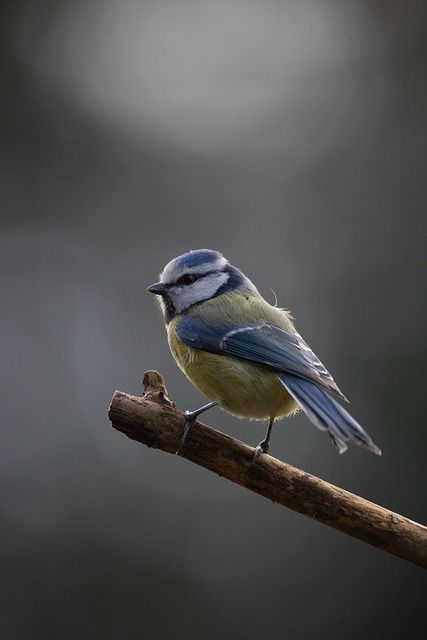
Bluetit --one of our common birds
In the Northern Hemisphere which lies above the equator, September marks the beginning of Autumn and its association with harvesting and preparations for the cold months ahead. Ireland is in this hemisphere. In the Southern Hemisphere which lies below the equator and includes countries such as Australia and New Zealand it heralds the start of Spring and warm weather.
One of Autumn's main features in the Northern Hemisphere is the change in the colour of the the leaves of deciduous trees and shrubs. They stop producing chlorophyll resulting in falling leaves which helps the plant to conserve water and energy ready for the harsher winter months. Ash trees are the first to shed their leaves while others like beech trees will sometimes retain a few of their leaves throughout the winter. many tree seeds will ripen and fall to the ground,for instance horse chestnuts produce those spiky green shells which contain the shiny brown seed called conkers. Conkers have been traditionally collected to play the game of the same name, where players try to break their opponent's conker.
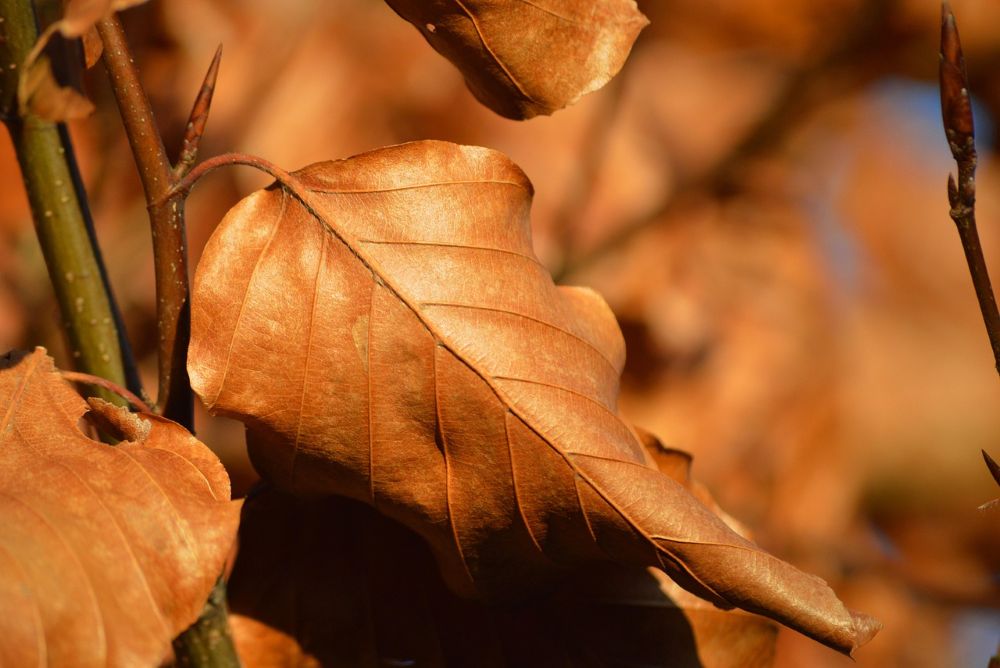 Beech leaves in autumn
If you quietly stand by still or flowing waters between March and August you may see small fish dashing around. These are likely to be sticklebacks named after the row of spines on their dorsal fin. These spines can be raised and locked in place making them a prickly mouthful for predators such as herons, kingfishers and pike!
There are two species of stickleback in Northern Ireland: the three spined and the 9 spined. The 3 spined is the most common. The 15 spined stickleback is also found but these are strictly marine. There is a small Hebridean form unique to Scotland called the spineless stickleback.
The stickleback is most commonly seen in the ocean but some like the 3 spined may be found in both fresh and sea water. The 9 spined is found only in fresh water such as peaty lochs, chalk streams, canals, ponds and lakes. These freshwater sticklebacks have evolved features different from those of marine species, they have no scales although some may have bony armour plates. Marine species have very prominent spines. The maximum size of the 3 spined is up to 8 cm. They are matured when they are roughly 3 cm. The large 15 spined stickleback can reach 25 cm!
What a very interesting name for this rather sinister black beetle with an evil reputation. Other names are devil’s footman, devil’s steed or cock tail beetle. In Ireland it is also called the coffin cutter. This beetle has been associated with evil since the Middle Ages It was thought to be able to curse people by pointing its raised body in their direction. In Ireland it was even thought that it could strike a person dead on sight and would devour all sinners.
For the past month at roughly three o’clock a flock of delightful long-tailed tits descend on to my bird hangers to feast on suet treats. They stay for about fifteen minutes and then as quick as they have come, they have gone.
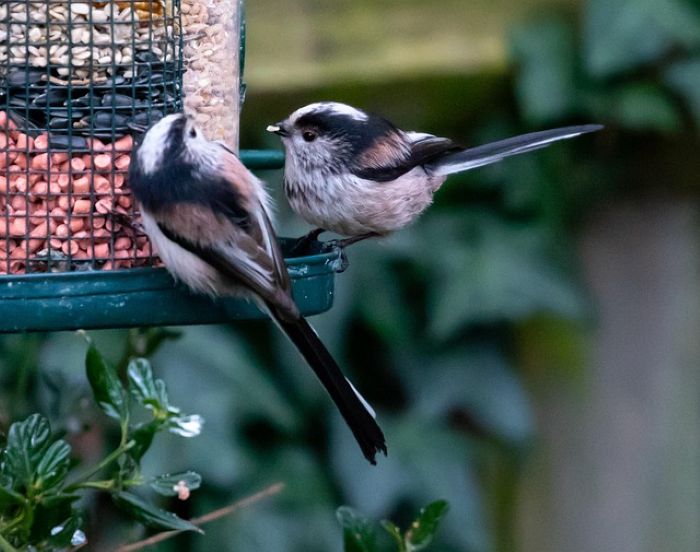
These small attractive birds weigh about the same as a 10 pence piece and possess a tail more than half their length. They are very striking with black, white and pink plumage. The first clue that there are about are from their high-pitched calls. They also never travel alone and can often be seen with other members of the tit family. A flock of long tail tits which can be more than 50 is called a party. The usual number consists of ten birds, comprising a breeding pair, their offspring and one or two non-breeding adults that are related to the male of the pair. This flocking instinct is very important to such a small bird as many eyes can detect predators and numerous voices raised in alarm will alert all the birds to danger.
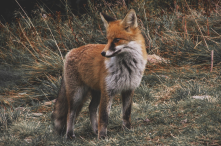
The European or Red fox is the largest of the 12 species which belong to the true fox group. They normally live alone or in small family groups. They can be found in all habitats from fields to mountains, farms to woodlands, sand dunes to city centres. Their preferred habitat is a mixture of woods, hedgerows, fields and somewhere with a water supply. They will dig their own den ( also called an earth) ) or occupy old badger setts and rabbit warrens. In towns they can make dens under sheds or other outbuildings. Dens are mainly occupied when breeding as they usually prefer to live above ground.
It is amazing to think that if you are lucky up to 50 species of birds may visit your garden during the winter. The most likely visitors will be starlings, house sparrows, blackbirds, blue and great tits, robins, goldfinches and the lovely delicate collared doves.
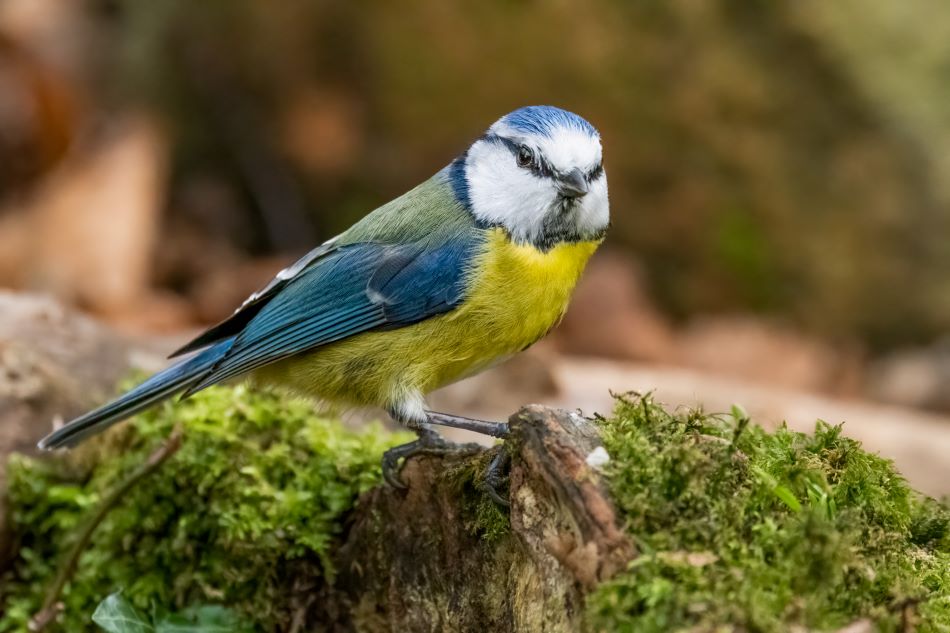
Blue Tit - Photo by Thomas Campbell
If your garden happens to be near to woods you are indeed very lucky as , woodpeckers, blackcaps, coal and long tailed tits can become regular visitors . Ground feeders like dunnocks, wrens and all thrush species, (fieldfares, redwings, blackbirds, mistle and song thrush) will visit gardens for fruit and berries. It is also not uncommon to have magpies and jackdaws lurking about often pinching the food from the smaller birds!
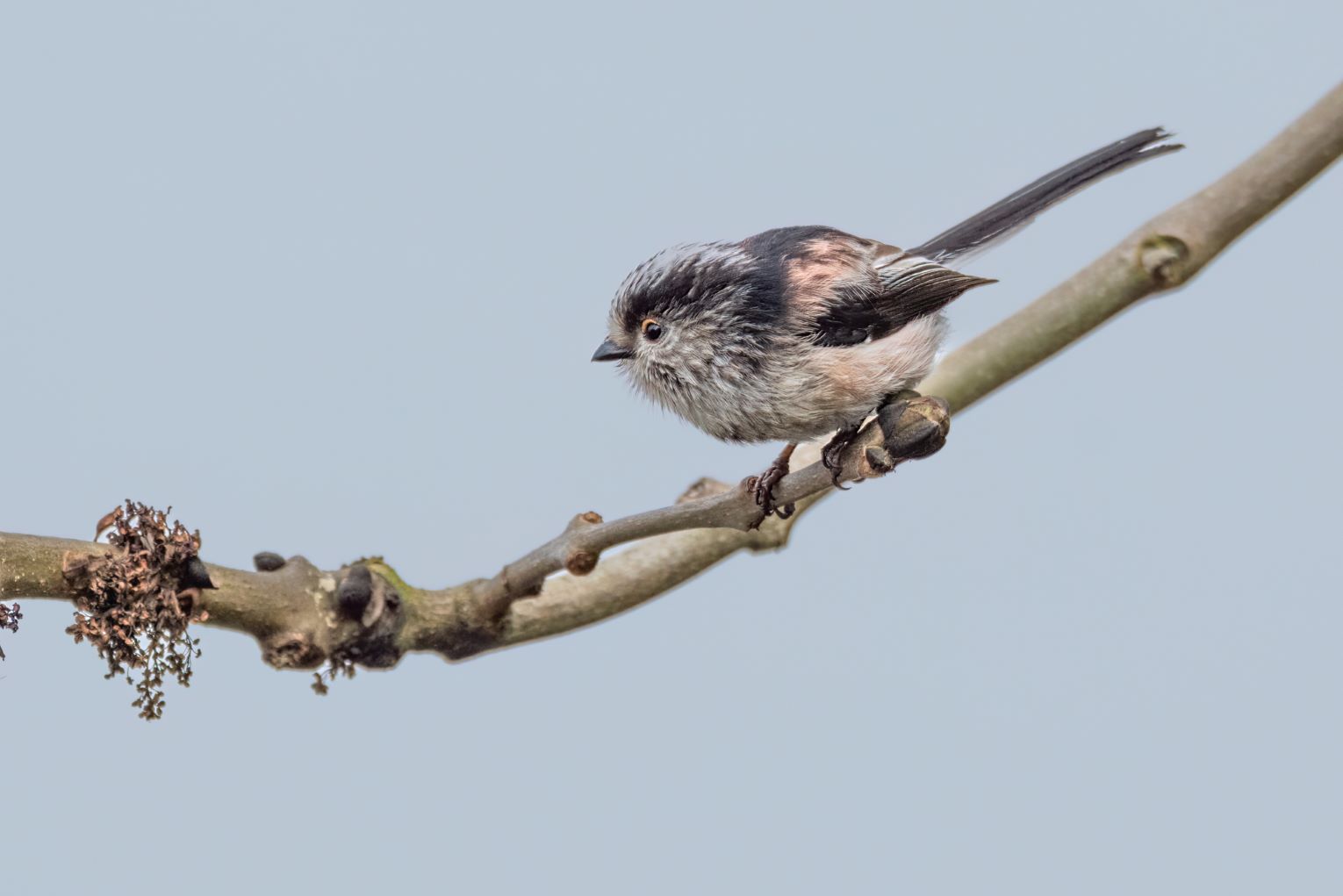
Long-tailed Tits--photo by Thomas Campbell
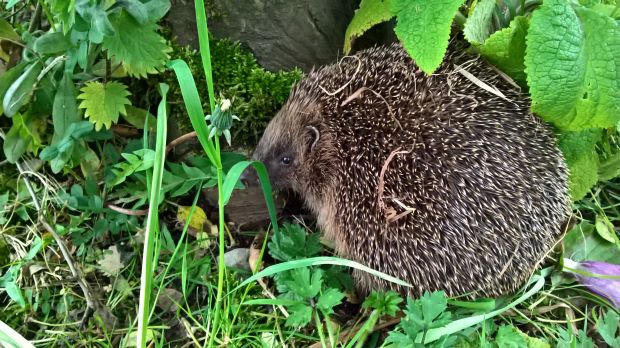
Why are hedgehogs called hedgehogs? Basically, it is because they like to live near hedgerows and the ‘hog’ part comes from the snorting noise rather like a pig which they make. There are other different names for hedgehogs. In medieval times they were known as urchins, they can also be called hedgepig, furze-pig or the wonderful sounding hotchi-witchi which is a Romany word. Their Irish name is An Grainneog which means ‘little ugly one’! It is strange that they were viewed in this way as now they are considered cute! Of course, one of the most famous hedgehogs is Mrs Tiggy Winkle, the washerwoman from the Beatrix Potter’s stories and I am sure everyone is familiar with Sonic from the Sega game, that blue hedgehog with attitude!
You are sitting watching the television. it is late at night; you are half asleep and then suddenly you see a large house spider running across the carpet. You scream!
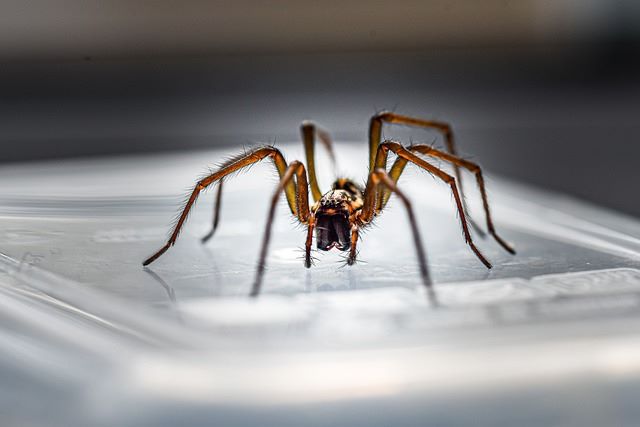
Common House Spider
Some statistics show that 50 percent of women and 10 percent of men have this spider fear or arachnophobia as it is called. Along with bats, snakes and sharks, spiders are a much-beleaguered species. Yet this should not be the case. It has been estimated that 25 million tons of spiders will kill about 800 million tons of prey every year. That’s a large amount!
FLITTERMOUSE Part 2
Northern Ireland has 8 species of bats namely the common pipistrelle, the soprano pipistrelle, the nathusius’ pipistrelle, the whiskered bat, the brown long-eared bat, the daubenton’s bat, the natterers bat and the leisler’s bat. Southern Ireland has one extra bat, the lesser horseshoe bat which have not yet been found in the North.
The common pipistrelle is the smallest and most common bat. It can eat thousands of insects in one night and is the most likely bat to be spotted in the garden. Their flight is fast and jerky. These are the species often found roosting in houses and a tell tail sign there are present are their droppings on outside walls and windowsills. The droppings resemble mouse droppings but can easily be distinguished as they are softer and will crumble to a fine powder when touched whereas mouse droppings won’t and are also very smelly!
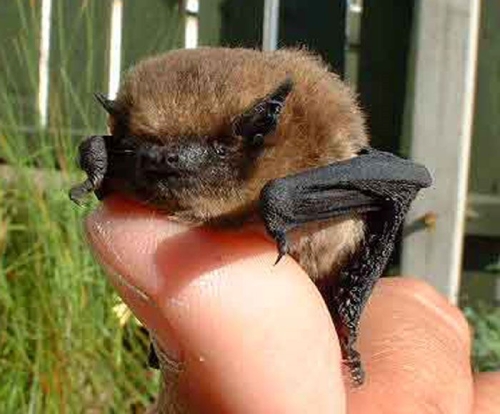
Common Pipistrelle (Photo by Mark Smyth)
In the mid 1500’s bats were often called by the rather enchanting name of flittermouse, no doubt because they resembled a mouse and had fluttery wings. Bats, however, are not related to rodents. Their closest relatives appear to be a group that includes whales, pumas and cows! They are also the only mammals capable of true flight.
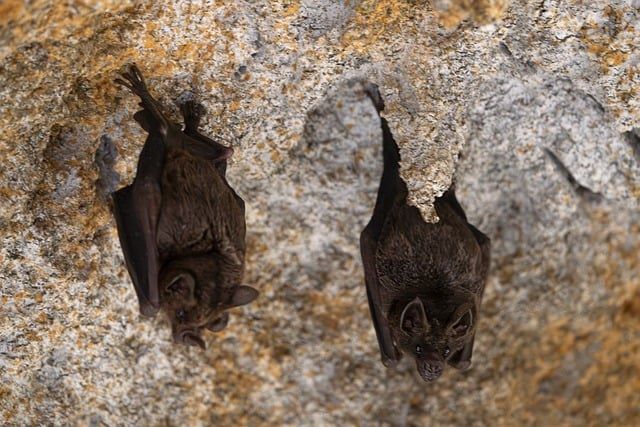
Bats hanging upside down
Inhabiting earth for more than 50 million years there are globally about 1400 species ranging from the tiny Kitti’s hog-nosed bat which weighs about the same as two paper clips to the Giant golden crowned flying fox which has a wingspan of 1.7 metres. In Northern Ireland 8 species of bats can be found.
Seeing dragonflies along with their close relatives the damselflies flitting across a pond or lake is a sure sign that the summer has begun!
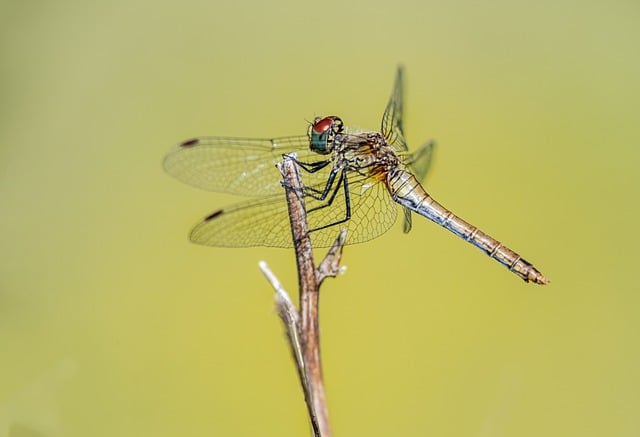
Four-spotted Chaser dragonfly
Dragonflies and damselflies have lived on this earth for 325 million years. In prehistoric times they were the largest flying insects with some having wingspans of more than 2 feet. They inhabit every continent apart from Antarctica, At the present time it is thought that there are 7,000 species of true dragonflies existing in the world.
In Ireland there are 14 resident dragonfly species, 11 resident damselflies and 5 visiting species. Dragonflies are easy to identify from other insects by having large bodies, small antenna and four long horizontal wings. They can reach speeds of up to 35 miles an hour. They have huge compound eyes so large that they nearly touch each other and each of these eyes have about 28000 single eyes. They rely on their eyesight more than touch or smell which is why their eyes are so complex and their antenna so tiny.
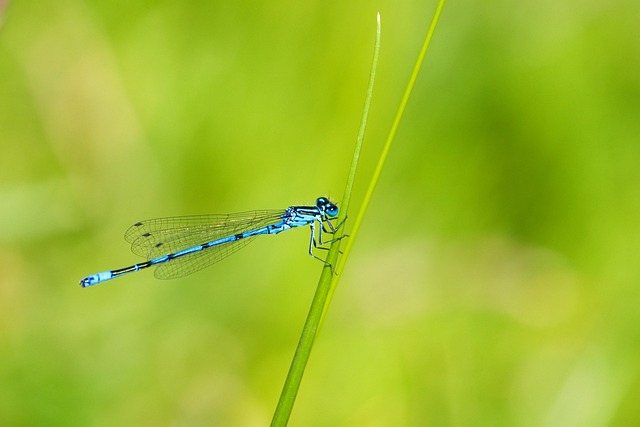
Azure Damselfly
Read more: Dragonflies and Damselflies. Make a twiggy dragonfly.
One of our prettiest resident butterflies is the Orange Tip. It belongs to the Pieridae family which is a large group of butterflies usually white, yellow or orange in colouration. It is widespread throughout the world and is found in Northern Ireland except in upland areas. It is present on Rathlin Island although in small numbers.
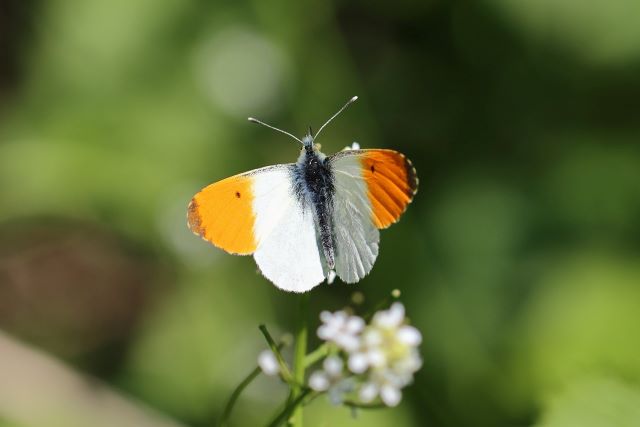
Orange Tip butterfly
It is medium size with a wingspan of 45 to 50 mm. Only the males have the orange pigmentation on the tips of their fore wings. One of the purposes of this is to serve as a warning to predators that they are distasteful to eat --a result of mustard oils that has accumulated in their bodies as a caterpillar! The females are white with black wingtips and can easily be mistaken for two other white butterflies, the Small White and the Green-veined. The way to tell the difference is that both the male and female orange tip have undersides which are mottled green and white (sometimes called parsley markings)
They are well camouflaged and are difficult to spot when resting on flowers such as cow parsley or garlic mustard. They blend in so well that predators will often miss them. Camouflage is also called cryptic colouration which is a tactic that organisms will use to blend in with their environment.
Read more: The Orange tip Butterfly and making a butterfly feeder