


 English
In the Northern Hemisphere which lies above the equator, September marks the beginning of Autumn and its association with harvesting and preparations for the cold months ahead. Ireland is in this hemisphere. In the Southern Hemisphere which lies below the equator and includes countries such as Australia and New Zealand it heralds the start of Spring and warm weather.
One of Autumn's main features in the Northern Hemisphere is the change in the colour of the the leaves of deciduous trees and shrubs. They stop producing chlorophyll resulting in falling leaves which helps the plant to conserve water and energy ready for the harsher winter months. Ash trees are the first to shed their leaves while others like beech trees will sometimes retain a few of their leaves throughout the winter. many tree seeds will ripen and fall to the ground,for instance horse chestnuts produce those spiky green shells which contain the shiny brown seed called conkers. Conkers have been traditionally collected to play the game of the same name, where players try to break their opponent's conker.
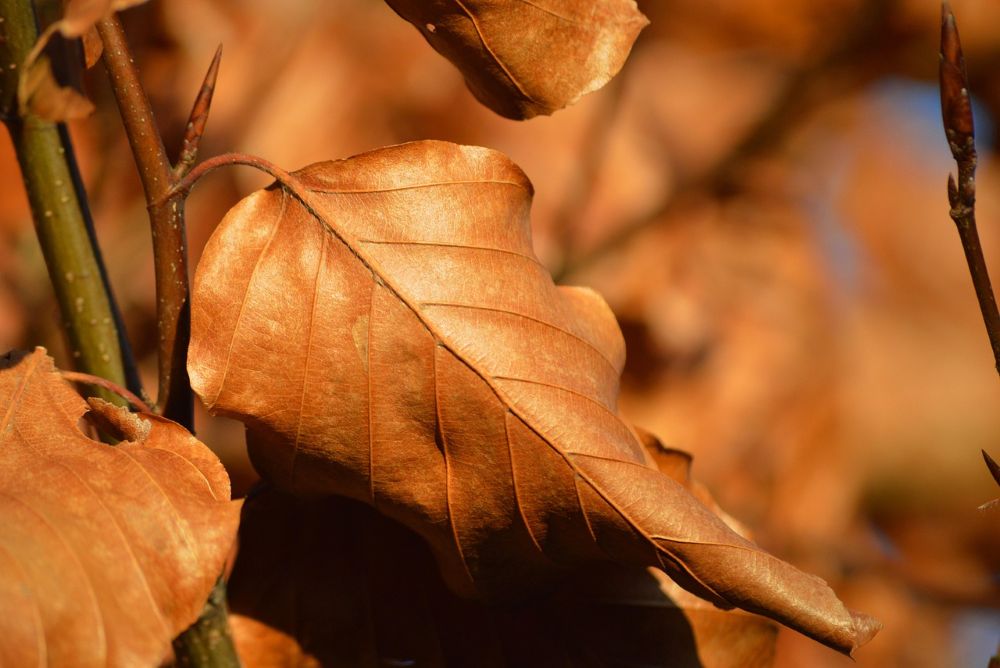 Beech leaves in autumn
Many hedges start to become colourful as they are laden with berries Rose hips for example can make a hedge shine out in an orange glow. Their berries are rich in Vitamin C. During the Second world war they were often made into a syrup when fruit was not available or was too expensive to buy, they also had the added bonus of having hairy seeds which naughty children could make into itching powder.!
It’s not only trees and shrubs that showcase their different colours but also late flowering plants like dahlias, sunflowers, asters and cyclamen, all beloved and visited by butterflies such as the speckled wood and red admirals. Different varieties of fungi suddenly pop up from nowhere. Many have strange names like the giant puffball which can grow to 80 cms in diameter or the fly agaric, the mushroom of fairy tales with its bright red cap and white spots. It can be found under birch trees. All fungi should be treated with caution as they can be very poisonous. It is best to look but not touch!This is also the time of year when British mammals become very busy as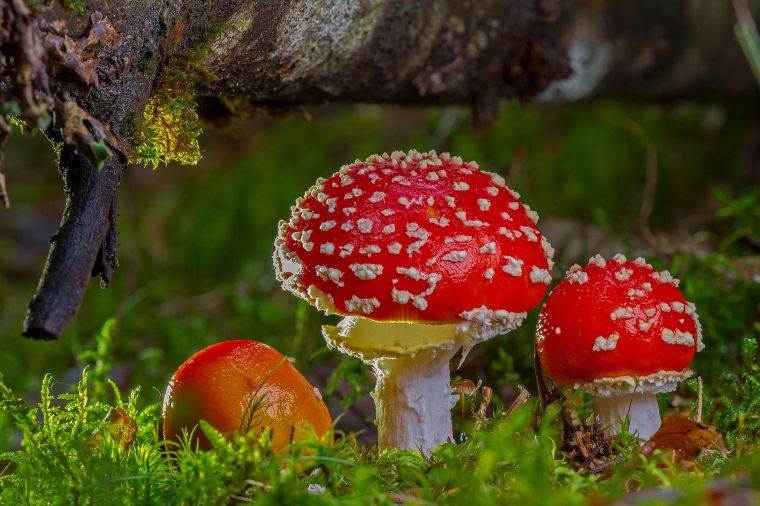 Fly Agaric Mushroom
This is also the time of year mammals all get very busy as they search for food to fatten up for winter. Foxes, badgers and squirrels become extremely active. Squirrels can be spotted burying nuts as a store for winter. Sometimes they pretend to do this to fool thieves like other squirrels and magpies! Red and grey squirrels do not hibernate but will nest in their dreys if the weather becomes very bad. During September the second litter of hoglets or baby hedgehogs are very active trying to find as much food as possible so that they have enough reserves of fat to see them through their hibernation period. Although dependent on weather they are usually safely in their hibernacula by November. If worried about a hedgehog supplementary feeding of kitten food or dried kitten food -- the meat varieties --- is beneficial to their survival. Bats can still be seen flying at twilight looking for prey although by November they should all be hibernating. Many deer such as red deer, fallow deer and sika deer have their annual breeding season in September. Red deer especially can become very dangerous as the males or stags fight each other to compete for harems of females.
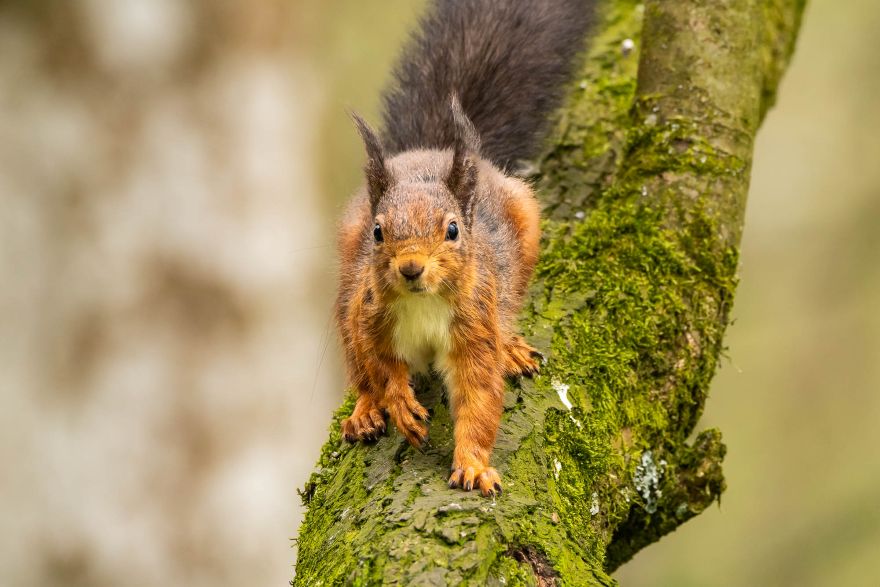 Red Squirrel image by Thomas Campbell
And then there is the house spider They move into our houses to seek shelter and warmth, and the males are also looking for ‘girlfriends’! Remember although they look scary, they are completely harmless and would prefer to run away rather than risk an encounter with a human. The most common one is the giant house spider which is large, fast moving and make large sheet like webs .
In early September if the weather is warmish swallows can still be brooding fledglings. Autumn is also when migratory birds arrive from the continent and North America, bramblings, redwings, fieldfares, waders such as knots and godwits, whooper swans and brent geese all arrive signalling that summer is truly over. Our resident birds fatten up for winter. Goldfinches for example descend onto thistles and teasels to eat the rich seeds. Unfortunately for the female goldfinch only the male with its longer beak can reach the oil fat teasel seeds inside. Jays-- their Latin name means ‘chattering acorn gatherer’--- now start collecting acorns and like the squirrel they bury them in the ground. One jay can collect 3000 acorns in September alone.
September is also known as the harvest month when farmers are occupied bringing in their crops. Harvest Fairs become popular with competitions ranging from prizes for the biggest marrow to first prize for the best scarecrow. A form of straw work known as corn dollies are made worldwide as part of harvest customs In Ireland for example Brigid Crosses are crafted while on the Island of Skye off Scotland one of the dollies created is called ‘the lame goat ‘ and of course there is the Harvest or Corn Moon to see, when the moon appears larger and brighter than usual. And finally, some interesting facts about September.It is the only month with the same number of letters as its numerical place on the calendar and it also was the month in which the first sighting of the lough Ness monster was seen in 565 AD. So, all and all September is perfectly splendid!
TO DO
Enjoy dry Autumn days by going to a wood or forest and crunching through the dried leaves. Watch the leaves come falling down. If you want a lucky year ahead, try and catch a dozen leaves as superstition says that a month of good fortune will follow for each one caught. Collect conkers, beech nuts and acorns. You can plant them into pots with soil and wait until Spring comes when they should emerge as a tiny tree. Examine under decaying logs and leaves for beetles, woodlice, millipedes and other creatures. Draw what you found in your nature notebook and make notes where you discovered it, weather conditions and the date and time. Afterwards you can treat yourself to a nice hot chocolate with marshmallows and sprinkles on top. Have fun!