


 English
18 members and guests attended our Fungus Foray at Derrynoid Forest on Saturday afternoon 18th October 2025. We were led by Jackie Arrell. We were very lucky to get a completely dry Saturday afternoon in some unsettled weather.
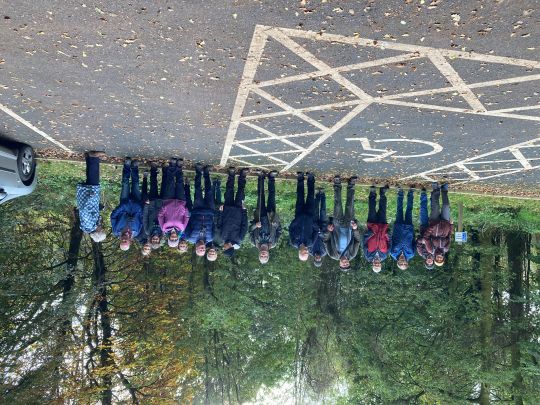
There had been a recent prolonged wet and unseasonably warm period of weather which led to a profusion of fungi this year. This is in contrast to last year when we had a dearth of fungi due to a prolonged dry spell in September 2023.
It is also a remarkable year for the profusion of acorns which were dropping everywhere and drumming on the roofs of our cars as they fell.
Jackie kept finding fungi in the most obscure places, so it was some time until we managed to leave the car park!
Throughout the afternoon Jackie found 42 species of fungi.
He also described the largest living organism in the world, that is honey fungus in Oregon which has killed over 2,000 acres of forest and by genetic testing has been shown to be a single organism estimated to be several thousand years old.
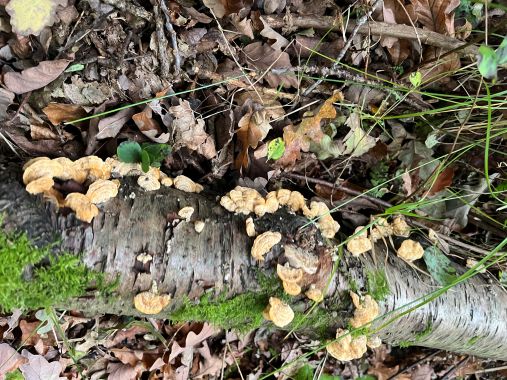
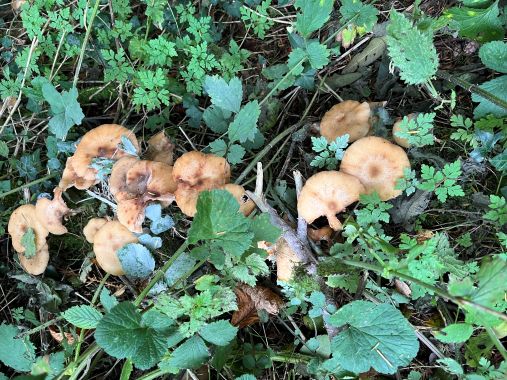
Hairy curtain crust Honey fungus
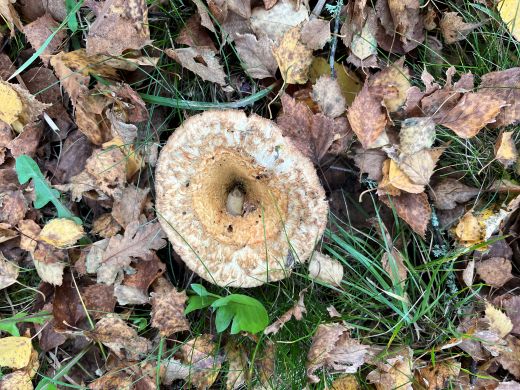
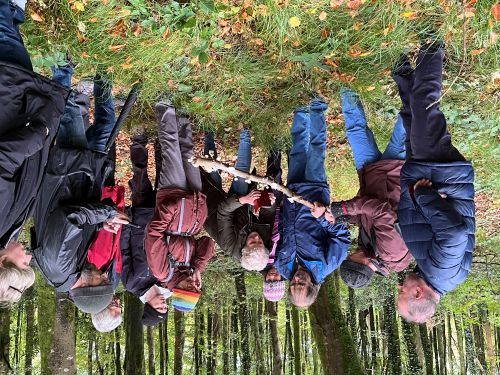
All intrigued by the porcelain fungus and the common funnel above
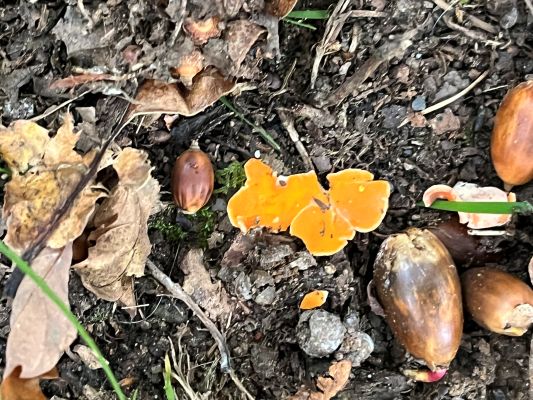
Orange peel fungus found among the acorns at the car park as we were leaving
The list of fungi identified at Derrynoid Forest
wrinkled club
pestle puffball
hairy curtain crust
honey fungus
clustered toughshank
common funnel
wood blewit
lemon disco
yellow club
snowy waxcap
meadow coral
mycena
bog bell
sycamore tarspot
beech milkcap
crystal brain
honey fungus with heavy growth of mould on it.
amethyst deceiver
crested coral
poison pie
charcoal burner
brown mottlegill
elastic saddle
buttercap
clouded agaric
porcelain fungus
common bonnet
beech tarcrust
beech woodwort
black bulgar
turkey tail
orange peel
beech jellydisc
candlesnuff
beechwood sickener
false deathcap
twisted deceiver
horse mushroom
sulphur tuft
sulphur knight
ochre brittlegill
twig parachute
On the way round Jackie also pointed out this common spangled gall wasp on the back of an oak leaf and later a cherry gall wasp also on the back of an oak leaf.
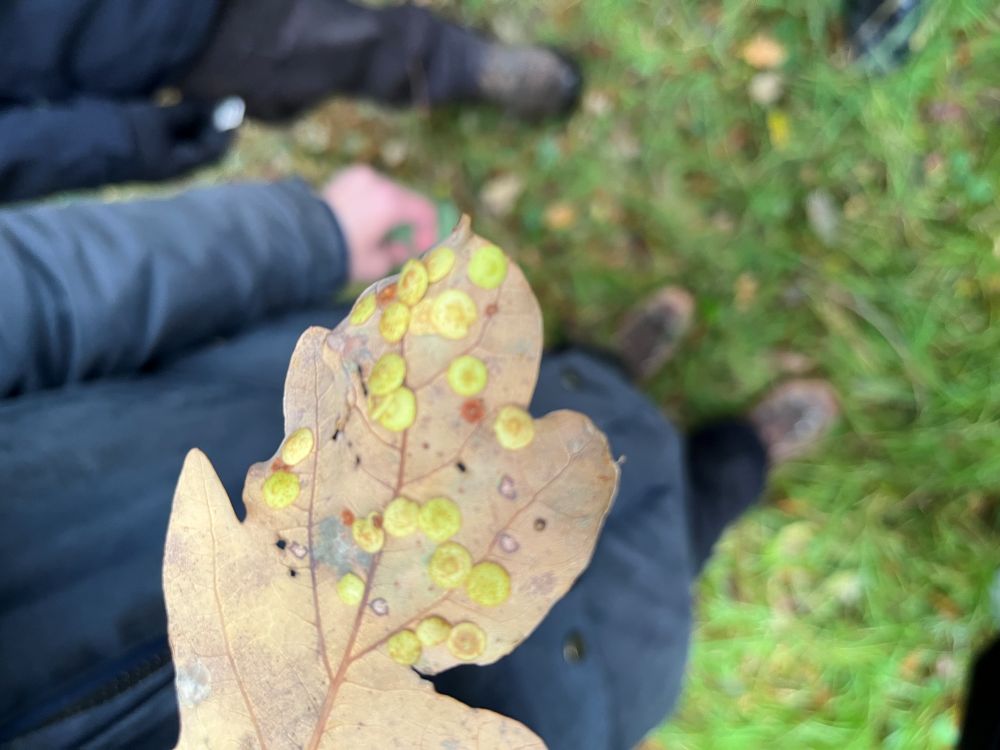
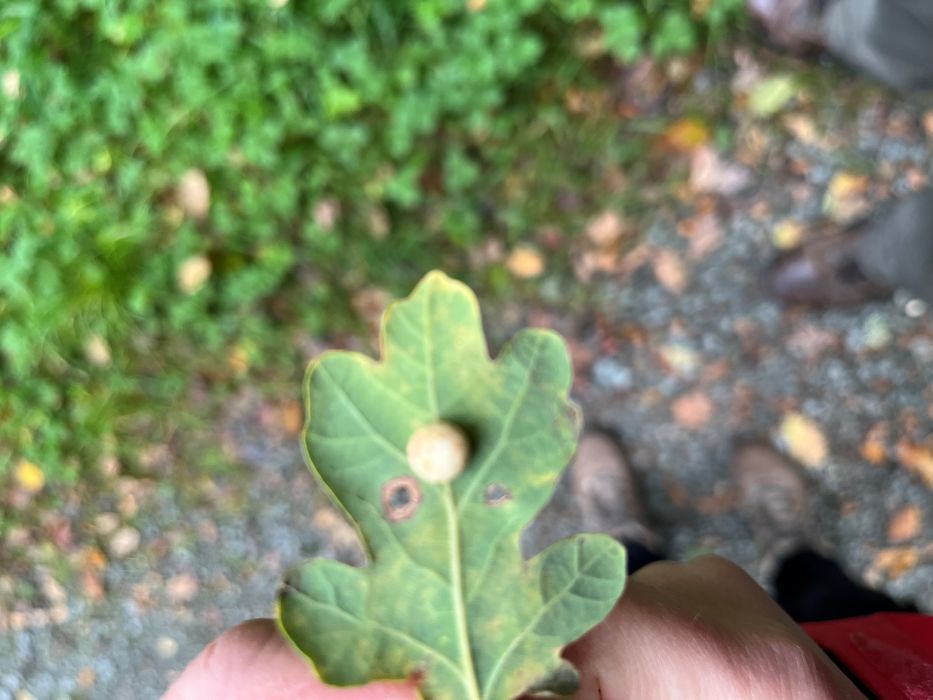
Common spangled gall wasp Cherry gall wasp
Trip report by Ernest Hunter